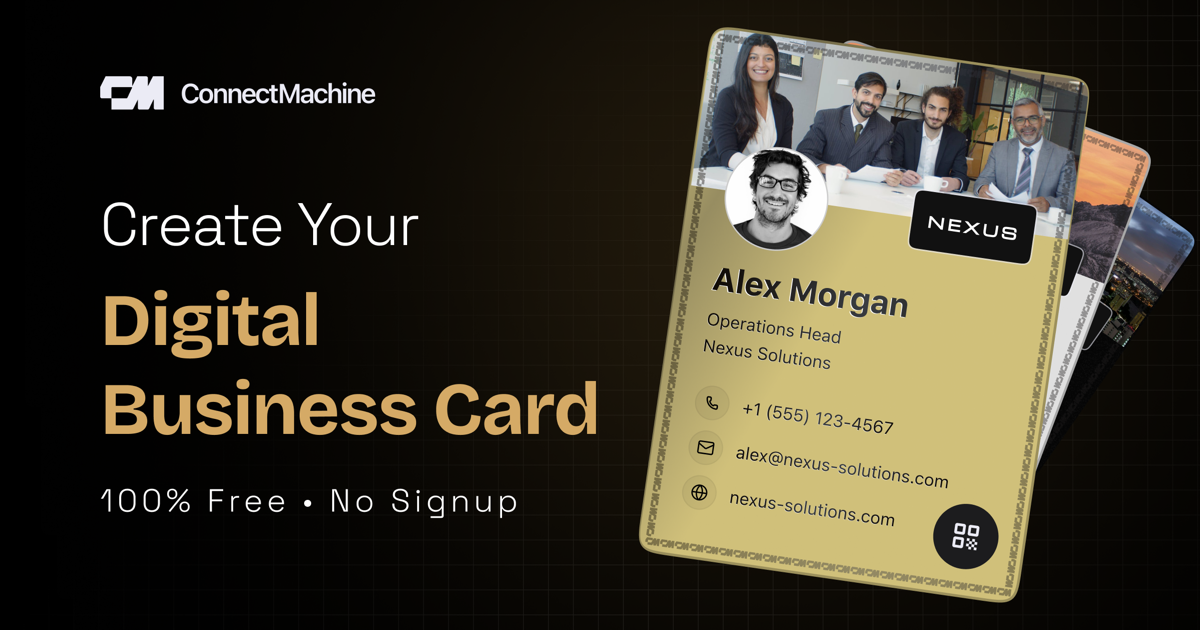

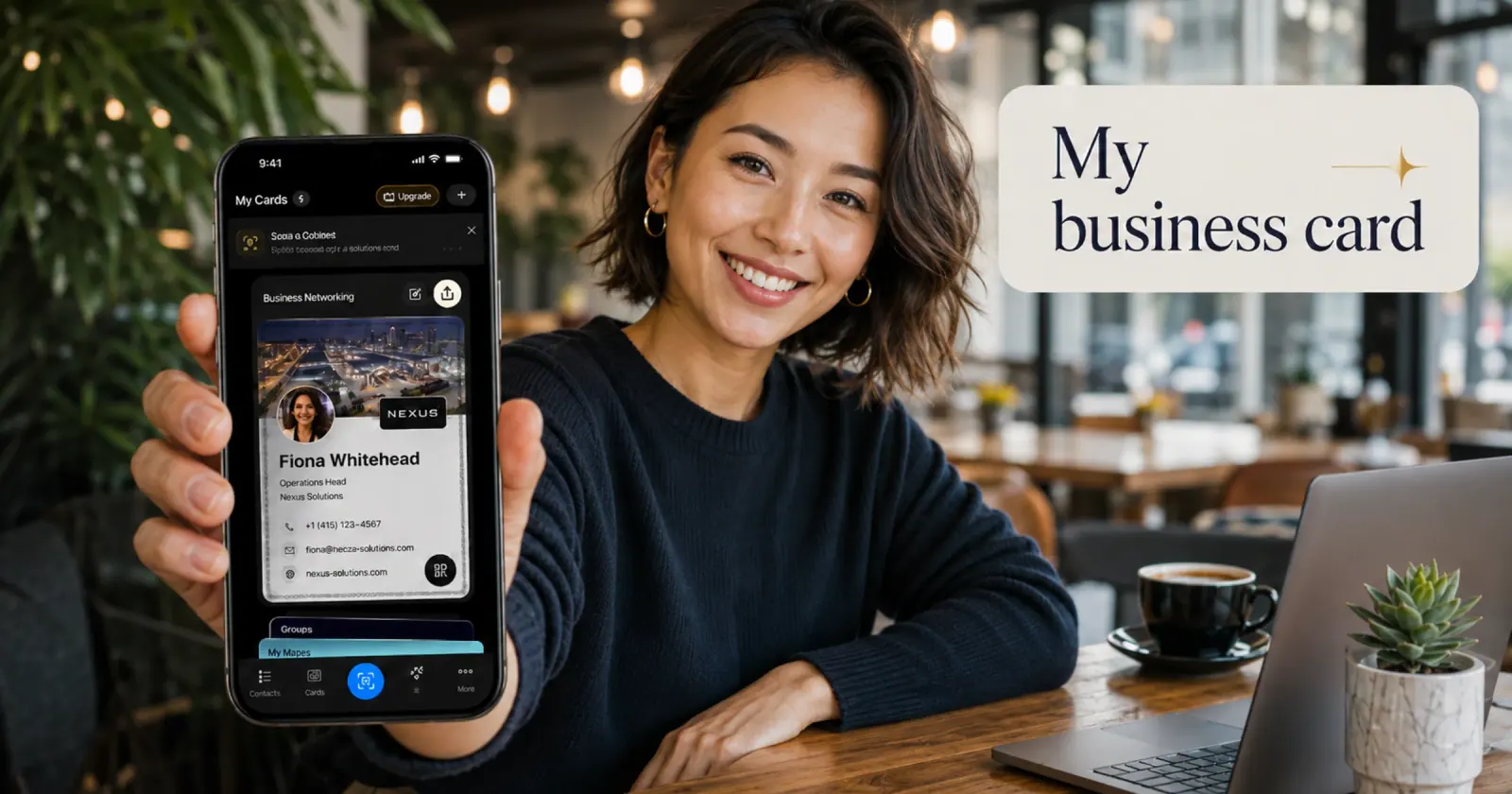
Short answer: yes, the business card is still relevant, because the problem it solves has not gone anywhere. Two professionals meet, the conversation goes well, and they need a fast, low-friction way to stay reachable to each other. That moment happens millions of times a day, and it still needs an answer.
What has changed is the medium. Roughly 88% of paper cards are discarded within a week, 63% of received cards are never entered into any contact system, and the pandemic years normalized contactless exchange for good. The ritual survived; the cardboard mostly did not.
So the useful question is not whether business cards are dead. It is which form of the card exchange fits 2026, where paper still genuinely belongs, and what you should personally carry. Here is the honest breakdown.
The case that business cards are dead
The obituary writers have real evidence. Most exchanged paper cards produce nothing: they are pocketed politely and thrown away, and even the kept ones usually never become a contact entry. LinkedIn handles the look-them-up-later use case. Email signatures carry your details on every message. And an entire generation of professionals has built careers without ever ordering a print run.
All of that is true, and all of it is an argument against paper as a medium, not against the exchange itself. Nobody scans a conference floor and concludes that people no longer want each other's details. They want them more than ever. They just increasingly refuse to retype them from a 3.5-inch rectangle.
The case that the exchange matters more than ever
Three things keep the card exchange alive as a ritual, whatever the medium.
The moment of meeting is unbeatable
Details exchanged during the conversation, while context and goodwill are at their peak, convert to real contact far better than a next-day LinkedIn request from a half-remembered name.
Not everyone lives on one platform
LinkedIn requires both people to be active there. A card exchange works across platforms, generations, and industries, from tech founders to real estate agents to tradespeople.
The gesture carries meaning
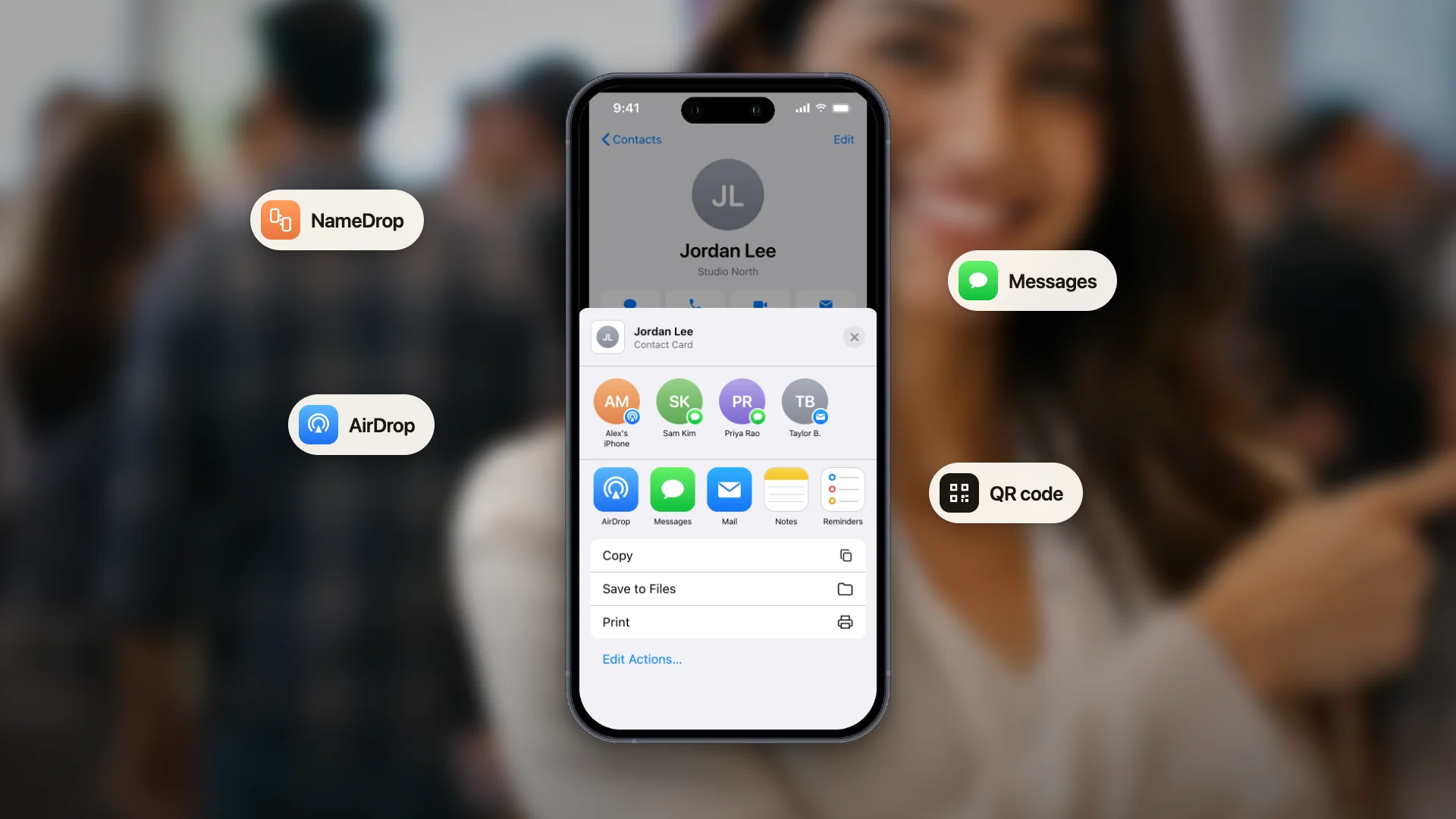
Offering your card, in any form, signals that the conversation mattered. That social function did not disappear when the medium went digital. A QR code presented with intent is the same gesture with a better success rate.
Where paper cards still genuinely belong
- East Asian business culture, where the two-handed card exchange remains a formal ritual and arriving without cards can read as unprepared.
- Senior executive and diplomatic settings where printed materials signal preparation.
- Luxury, craft, and design businesses where the physical card is a product sample in itself.
- Events and audiences where smartphones are absent, unwelcome, or impractical.
- As a QR carrier: a small print run with your digital card's code on it covers every scenario above while still converting recipients into saved contacts.
That last case is the one worth planning for. If paper is going to carry your code, the print has to survive a real scan before any of the design decisions matter, which makes it a question of sizing a QR code for print rather than taste.
Reading the room
Match the medium to the setting
Relevance in 2026 is situational. The professional error is not carrying paper or going digital. It is bringing the wrong one to a setting that expects the other.
Set the reminder while the conversation is still fresh.
What replaced paper everywhere else
For the ordinary majority of professional meetings, the exchange now happens digitally, and it is worth being precise about what won.
QR codes
The universal answer. Any modern phone camera can scan one, no app needed on the recipient's side, and the details save straight to their contacts.
Shareable card links
A digital business card lives at a public URL, so it travels through email, WhatsApp, LinkedIn messages, and video call chats, places paper never reached.
Wallet passes
Cards stored in Apple Wallet or Google Wallet are one swipe away at an event, which is exactly the convenience the shirt-pocket card stack used to provide.
The common thread is that the digital exchange fixes paper's fatal flaw: what happens after the handshake. The details arrive saved, searchable, and self-updating instead of fading in a jacket pocket.
So what should you carry in 2026?
For most professionals the answer is a digital card as the default, plus a small stack of quality paper cards if your industry or region has formal expectations. That combination covers every room you will walk into this year. And if a drawer of paper cards is what prompted the question in the first place, digitise the cards you already have in one batch rather than typing them out.
- Set up a digital business card with your details, photo, and links. It takes about three minutes.
- Add it to your phone's wallet so it is ready at events without hunting through apps.
- Put its public URL in your email signature and LinkedIn profile so the card works when you are not in the room.
- If you keep paper for formal settings, print your QR code on it so even the paper converts.