
A business owner is most often called the owner, founder or CEO or, in a partnership, a partner. The right title depends on your company's size, its legal structure and who will read it: customers usually want to know you're the person in charge, while investors and larger clients expect formal titles such as CEO or managing director. Below are 25 business owner titles grouped by type, with when to use each.
Classic business owner titles
| Title | When to use it |
|---|---|
| 1. Owner | Small local businesses where customers want the person in charge: shops, salons, trades, restaurants |
| 2. Founder | You started the business and want people to know it, especially early on |
| 3. Co-founder | You started it with one or more partners |
| 4. Owner and founder | You started it and still run it, and want both on record |
| 5. CEO (chief executive officer) | A company with staff, investors or larger clients who expect a formal title |
| 6. President | A US corporation, or a business that wants a formal title without "CEO" |
| 7. Managing director | Common in the UK, Ireland, India and Australia for the person running the company |
| 8. Director | A UK limited company director, or a small agency or studio lead |
| 9. Principal | Consulting, architecture, design and law firms |
| 10. Partner / | Partnerships such as law, accounting and consulting firms |
| 11. Proprietor | A sole trader or a shop, often on formal documents |
| 12. Owner-operator | Trades, transport and franchises, where you own the business and do the work |
Small business owner titles
For a business of one to ten people, simple titles work best. People want to know they're dealing with the person who can make decisions.
| Title | When to use it |
|---|---|
| 13. Head of [business name] | Friendly, clear, and doesn't sound corporate |
| 14. Lead [trade], for example Lead Electrician or Lead Designer | You own it and also do the main work |
| 15. General manager | Restaurants, hotels, gyms and shops where you run day-to-day operations |
| 16. Studio director / | Studios and retail, when "owner" feels too formal or too blunt |
Creative business owner titles
Creative titles can work for studios, coaches and brands with a playful voice. Pair one with a plain title nearby, so people still know you're in charge, for example "Head Baker, Owner".
| Title | When to use it |
|---|---|
| 17. Creative director | Design, photography, content and marketing studios |
| 18. Head baker / | Food and drink businesses where the craft is the brand |
| 19. Chief storyteller | Brand, video and content businesses |
| 20. Lead maker | Handmade products and craft businesses |
| 21. Chief everything officer | One-person businesses, with a sense of humour, and never for investors or formal documents |
Titles for growing companies
| Title | When to use it |
|---|---|
| 22. Founder and CEO | A startup that has raised money or is talking to investors |
| 23. Chairman / | You own it but someone else runs it day to day |
| 24. Chief operating officer (COO) | A co-owner who runs operations while a partner is CEO |
| 25. Executive director | Nonprofits and charities, where "owner" doesn't apply |
Using Founder and CEO with investors? See digital business cards for founders.
Owner vs CEO vs founder: what's the difference?
- An owner holds the business, or a share of it.
- A founder started the business. You stay a founder even after you sell it or step back.
- A CEO runs the company day to day and answers to the owners or a board. In a small business, one person is often all three.
So "CEO" describes the job you do, "owner" what you hold, and "founder" how the business began. Pick the one that matters most to the people reading it. Customers care that you're in charge; investors care that you run it and started it.
Does your legal structure change your title?
Sometimes. In the US, owners of an LLC are called members, and the one who runs it is often called the managing member. Corporations name officers such as a president, secretary and treasurer. In the UK, people who run a limited company are its directors. On contracts, bank forms and official filings, use the title your company documents give you. On your card, website and email, you can use a more everyday title. Rules vary by country, so check with an accountant or lawyer if you're unsure.
How to choose your title
- Think about who reads it most: customers, partners, investors or staff.
- Match your industry. "Principal" fits a design firm; "Owner" fits a bakery.
- Keep it short enough to fit on one line of a business card.
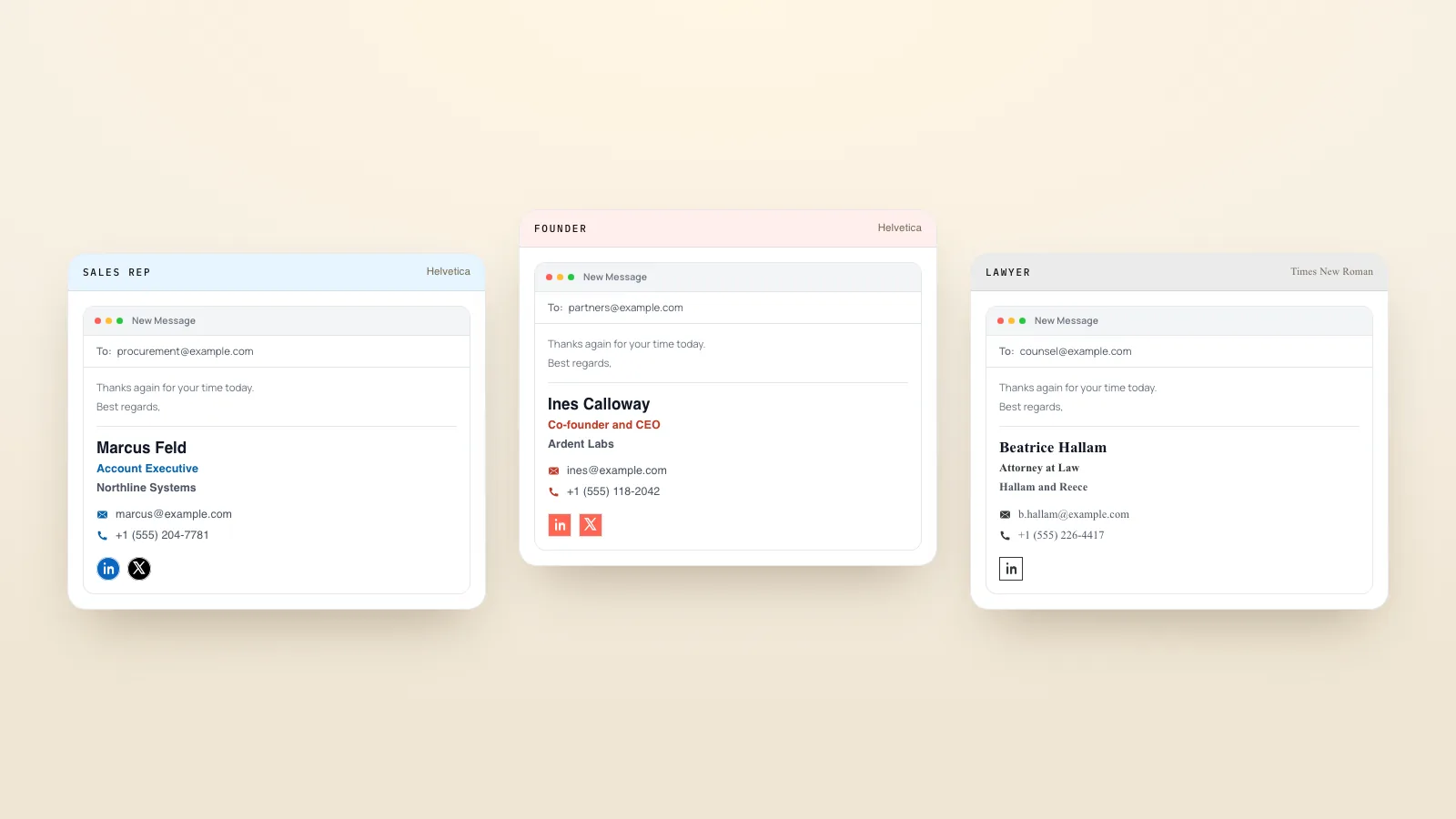
- Use the same title on your card, email signature and LinkedIn, and a short professional bio, so people recognise you.
- Change it as you grow. "Owner" on day one can become "Founder and CEO" when you hire a team.
How to show your title on your business card
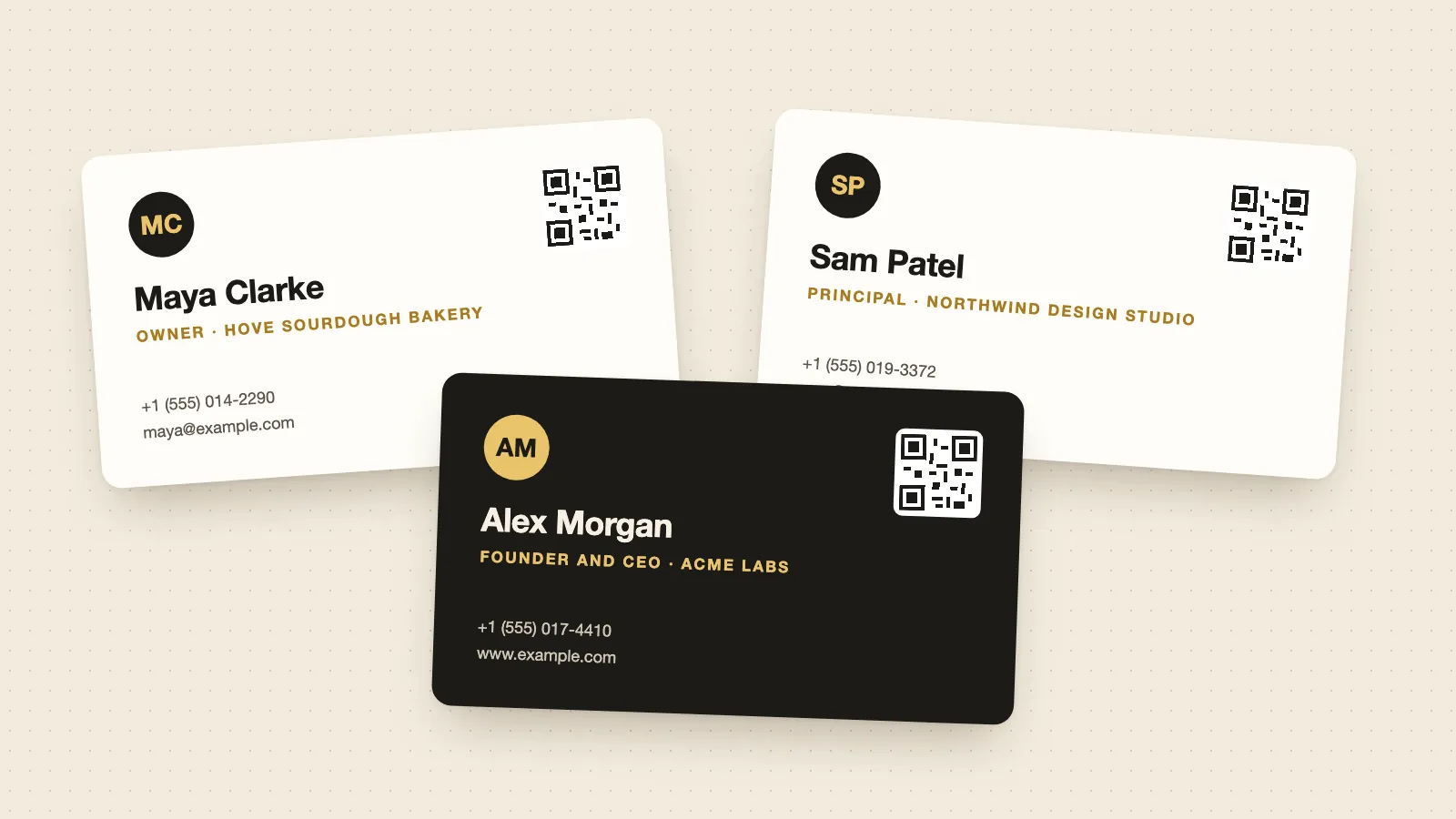
Put your title on its own line under your name, then your business name. For example:
- Maya Clarke
Owner, Hove Sourdough Bakery - Sam Patel
Principal, Northwind Design Studio
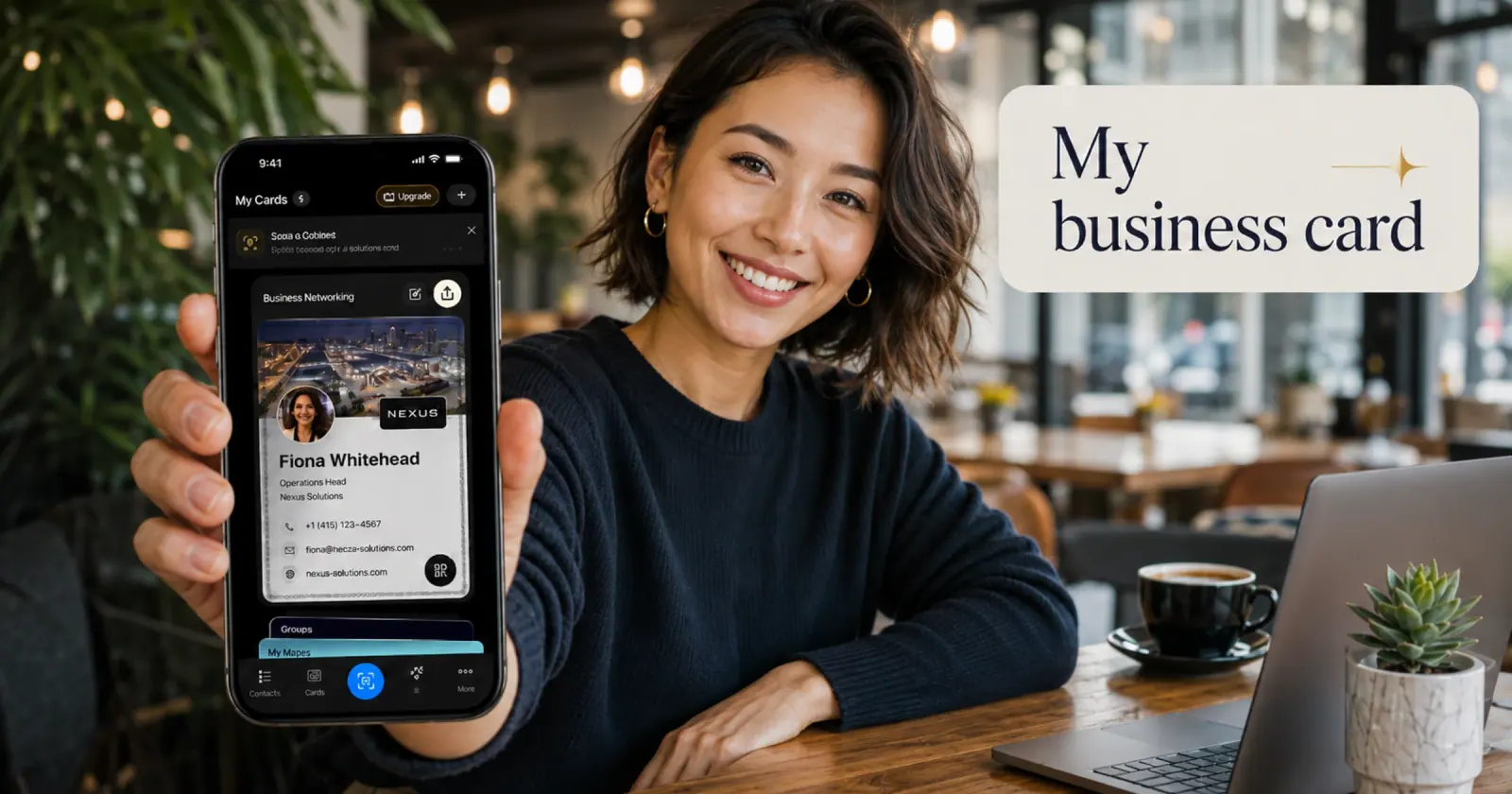
If you talk to very different people, use more than one card. The ConnectMachine free plan includes up to 4 digital business cards, so you can have a "Founder and CEO" card for investors and an "Owner" card for customers.
Add the same title to your email signature too.
Put your new title on a free card. Name, title, company, photo and contact details on one card. Share it by QR code or link, and update your title any time without reprinting.