

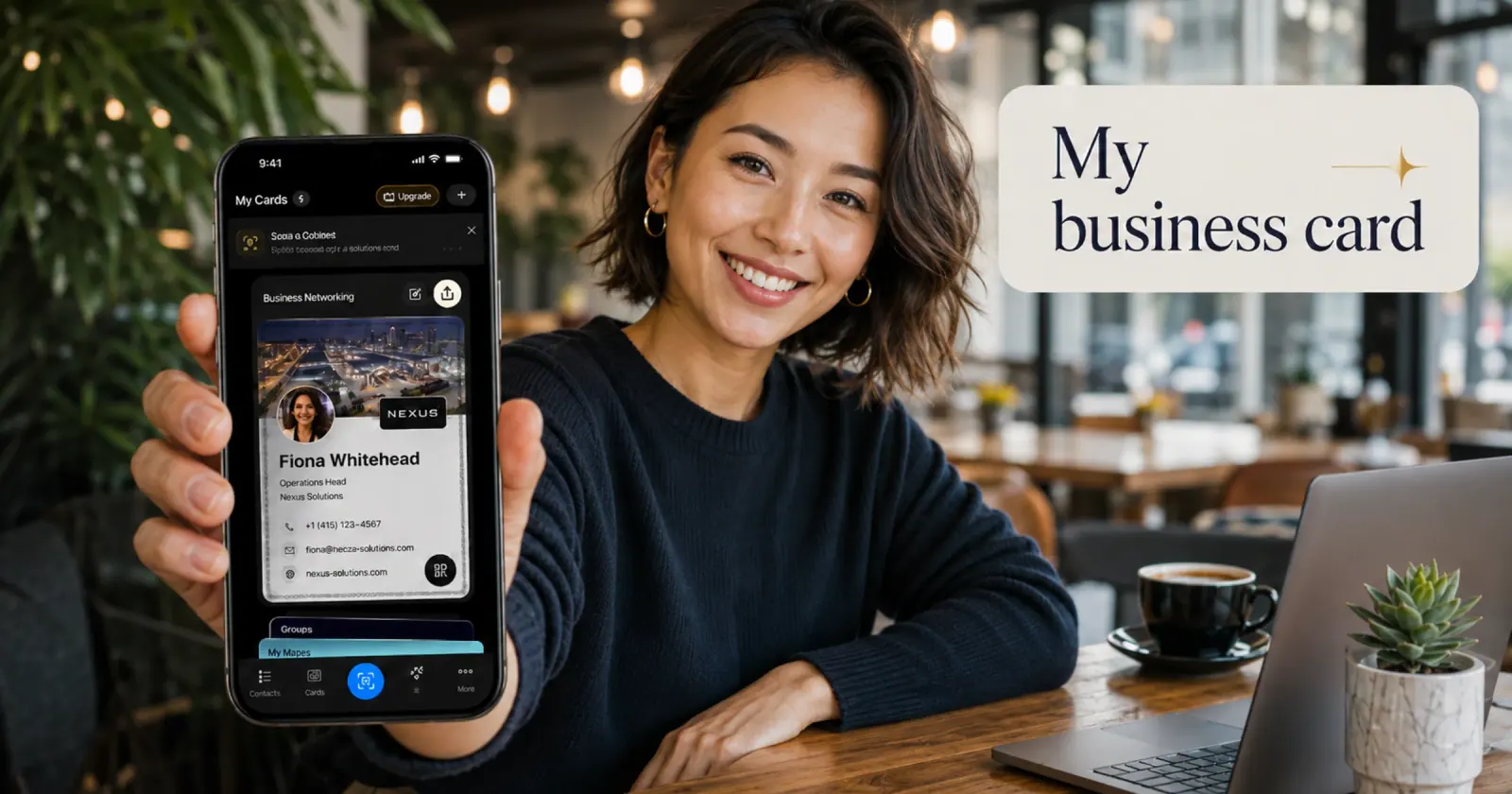
Ask Google whether digital business cards are worth it and the results say yes, because most of them are written by companies that sell one. Ask Reddit and the most upvoted answer is usually a shrug: a free QR code that opens your contact details does most of this, so why pay a monthly fee?
We build one of these products, so you would expect us to argue with the skeptics. Mostly we will not. A digital business card is worth it for some people, unnecessary for many, and a bad buy in a few situations vendors rarely mention. This post is about telling those apart.
The short answer
If you hand out your details a few times a month and rarely think about the people you meet again, you do not need to pay anyone. A free vCard QR code on your lock screen or a printed card covers you, and you can make one free, without an account, in a few minutes.
Paying starts to make sense when the card is not really the problem: when you meet enough people that you lose track of who mattered, when a team needs every card on brand and centrally managed, or when you walk out of events with a stack of paper cards and no plan for them. Those are the jobs a platform actually does, and none of them are solved by a static QR code.
What the skeptics get right
The recurring complaints in the Reddit threads on this topic are worth taking seriously, because most of them are true.
- Subscription fatigue is real. Paying monthly for what a free vCard QR does is a bad deal, and several platforms charge exactly that.
- Recipients forget. A shared contact saved to someone's phone disappears into their address book, and most exchanges are never looked at again.
- NFC cards keep getting called a solution in search of a problem. A QR code printed on anything does the same job with nothing to buy.
- Phones keep absorbing the category. NameDrop, contact posters, and wallet passes ship with the phone and cost nothing.
If a vendor's pitch does not survive those four points, the skeptics are right about that vendor. The honest question is what a platform does that a free QR code cannot.
Where a free QR code stops
It goes stale
A vCard QR encodes your details at the moment you made it. Change your title, number, or company and every lock screen, slide, and printed card carrying the old code now hands out wrong information. A hosted card updates live everywhere the moment you edit it.
It only works in one direction
Your QR gives your details out. It does nothing for the details coming back: the paper cards you collect, the people who scanned you at an event, the follow-ups you meant to send. Sharing your own details was never the hard part; keeping track of everyone else's is.
It remembers nothing
Six months after a conference, the question is never whether someone has your email. It is whether you can find the person who mentioned a partnership, and what exactly they said. A static code has no answer to that; that recall is the actual product a good platform sells.
Who should actually pay
People who meet a lot of people
Founders, consultants, recruiters, and salespeople whose problem is volume. If you regularly fail to place a name two weeks after an event, notes, scanning, and searchable context pay for themselves the first time they rescue a deal.
Teams that need control
The willingness to pay in the Reddit threads shows up almost exclusively here, and for good reason: central billing, on-brand cards for every employee, cards that survive staff turnover, and contacts that reach the CRM without manual cleanup.
Event-heavy roles
If you collect dozens of cards and badges per event, scanning and export are the job. Doing that by hand is the most expensive free option there is.
What it actually costs
The category's free tiers are genuinely usable, and paid individual plans run roughly $3 to $10 per month, with team plans around $4 to $7 per seat. We priced the whole category, with the limits and the fine print, in how much do digital business cards cost.
One cost worth zero tolerance: NFC hardware you must re-buy when your details change. If a physical object matters to you, print a QR code on a normal card and you keep the object without the reprint cycle.
A test that settles it
You do not have to decide this in the abstract. Build a free card, use it for two weeks, and watch two things: whether anyone you meet actually saves it, and whether you ever go back to look someone up afterwards. The first tells you if you need a digital card at all. The second tells you if you are the kind of person a paid plan is for.