
Une carte de visite en papier contient environ sept informations, parce que c'est tout ce qui tient dessus. Une carte numérique n'a pas cette limite, alors on la remplit : tous les profils sociaux, tous les liens, tous les numéros de téléphone jamais utilisés. Résultat, une carte qui demande à son destinataire de prendre des décisions au lieu de lui en faciliter une seule.
La contrainte utile n'est pas l'espace, c'est l'attention. On regarde votre carte dans les dix secondes qui suivent la rencontre, puis on enregistre vos coordonnées ou pas. Tout ce qui figure sur la carte aide à ce que cela arrive, ou bien y fait obstacle.
Ci-dessous : les incontournables, les éléments qui méritent leur place, ce qu'il vaut mieux laisser de côté et les ajouts qui comptent selon le métier.
Les quatre incontournables
- 1
Votre nom, orthographié comme vous l'utilisez
Le nom sous lequel on vous connaît vraiment, dans la forme que l'on cherchera plus tard. Si vous employez une version courte à l'oral, employez-la ici aussi pour que la carte corresponde à la personne rencontrée.
- 2
Un intitulé de poste compréhensible par un inconnu
Dites ce que vous faites, pas ce que l'organigramme vous appelle. « Alchimiste de la croissance » est une blague qui cesse d'être drôle quand quelqu'un essaie de se rappeler pourquoi il devrait vous appeler.
- 3
Un moyen de contact fiable
Le canal sur lequel vous répondez vraiment. Un canal qui fonctionne vaut mieux que trois hypothétiques. Tout le reste est secondaire.
- 4
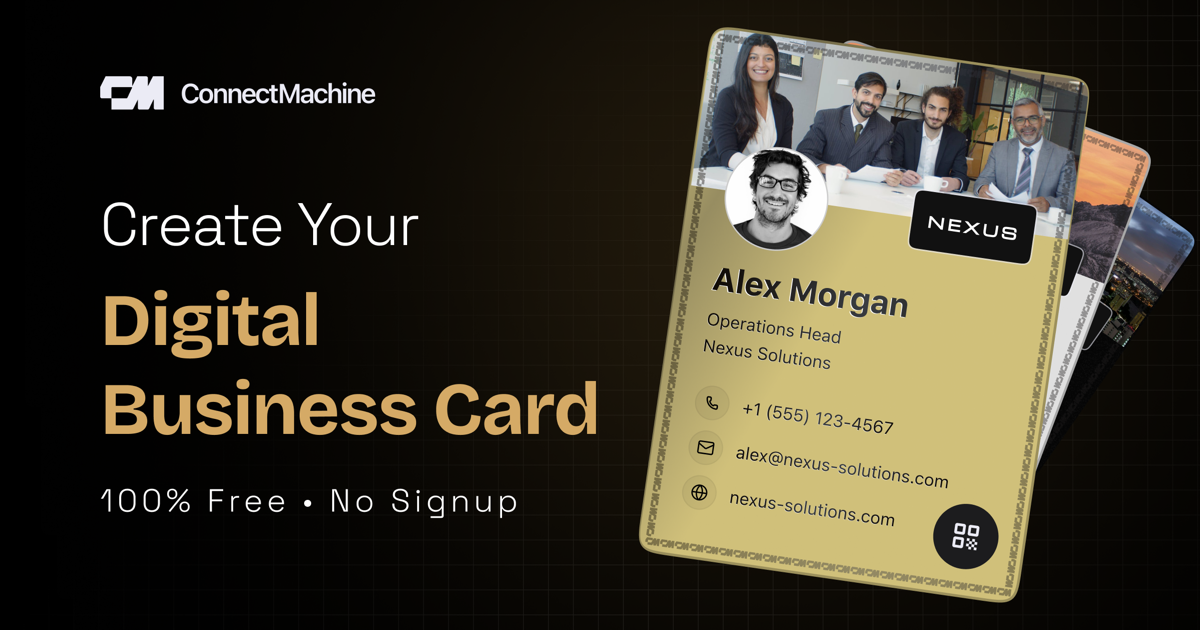
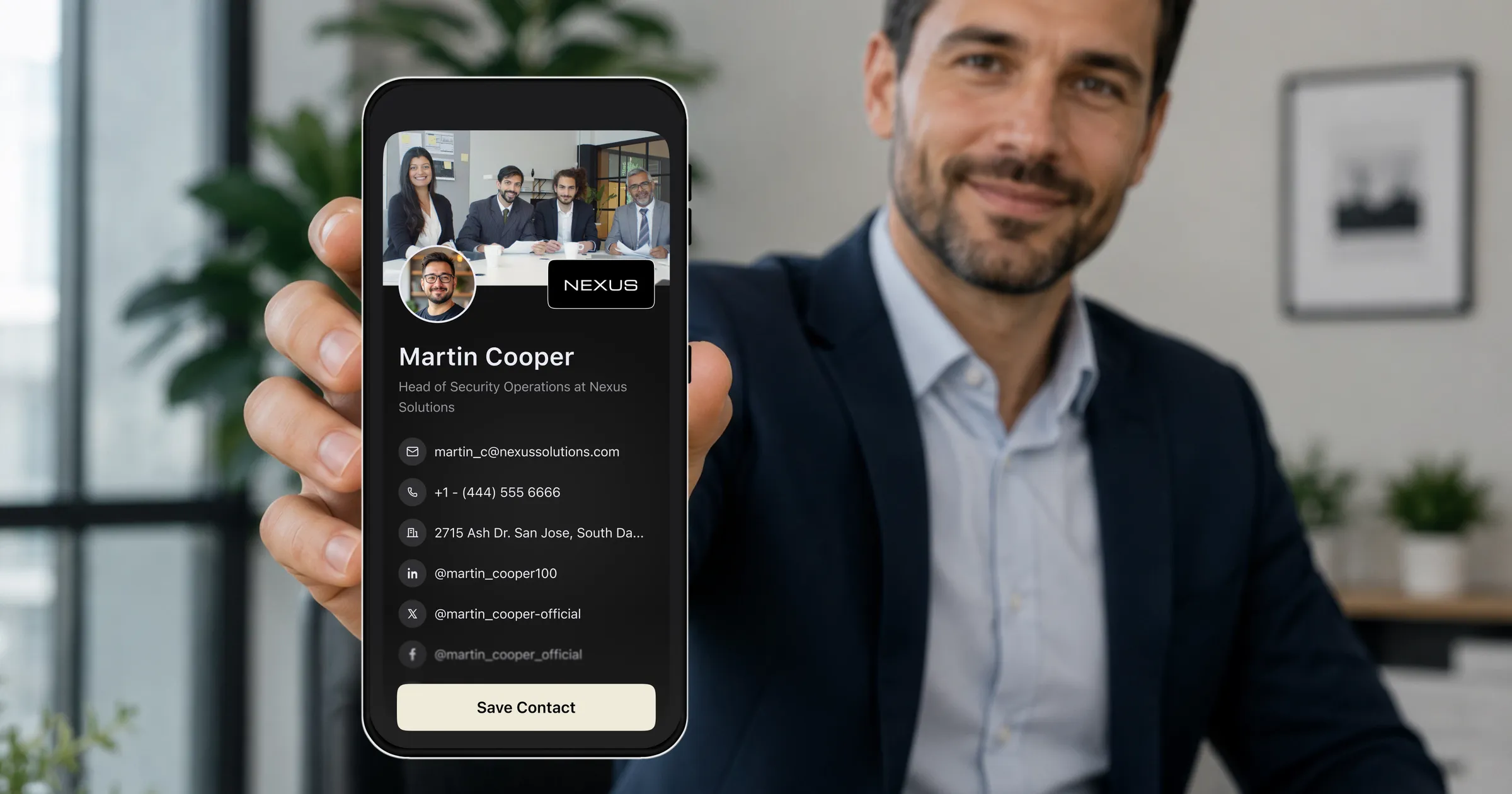
Une photo de votre visage
L'élément le plus sous-estimé. Lors d'un événement où l'on rencontre vingt personnes, c'est votre visage qui relie la carte à la conversation. Le logo d'une entreprise ne peut pas jouer ce rôle pour une personne.
Ce qui mérite sa place
Votre entreprise et son logo
Le contexte de qui vous représentez, et un signal de confiance si la marque est connue dans votre secteur. Indispensable si vous êtes en contact avec des clients, facultatif si la marque, c'est vous.
Un lien principal
LinkedIn pour la plupart des professionnels, un portfolio pour les profils créatifs, une page de réservation pour ceux qui vendent leur temps. L'important est que l'on voie immédiatement quel lien est le principal.
Un lien de prise de rendez-vous, si l'objectif est la réunion
Si l'étape naturelle après vous avoir rencontré est un appel, supprimer les allers-retours vaut plus que n'importe quel autre élément de la carte.
Qualifications et informations d'agrément
Les cartes ConnectMachine peuvent afficher les informations d'agrément et de qualification. Dans les professions réglementées, ce n'est pas décoratif : c'est ce qu'un client potentiel vérifie avant de vous appeler.
Un lien vers les avis, si votre activité vit de la recommandation
Les cartes peuvent porter un bouton renvoyant vers votre page d'avis Google. À utiliser de préférence sur une carte de suivi, après un travail bien fait, plutôt que comme une demande jointe à une première présentation.
Ce qu'il faut laisser de côté
- Tous les profils sociaux que vous possédez. Un compte personnel où vous publiez vos photos de vacances n'est pas un atout professionnel, et l'ajouter rend les liens utiles plus difficiles à trouver.
- Votre adresse personnelle. Aucune situation de réseautage ne l'exige, et une carte est par nature quelque chose que l'on remet à des personnes tout juste rencontrées.
- Plusieurs numéros de téléphone. Choisissez celui auquel vous répondez. En afficher trois indique surtout que vous êtes difficile à joindre.
- Un numéro de fax, ou tout canal sur lequel recevoir quelque chose vous agacerait.
- Les liens morts. Un portfolio qui n'a pas bougé depuis trois ans est pire que pas de portfolio, parce qu'il invite à vous juger sur d'anciens travaux.
Le choix délibéré
Votre carte est publique par nature
Une carte existe pour être remise à des personnes que vous venez de rencontrer, et elle vit à une adresse publique. Y faire figurer votre mobile personnel est un choix légitime, mais faites-en un choix plutôt qu'un réglage par défaut.
Programmez le rappel pendant que la conversation est encore fraîche.
Les ajouts qui comptent selon le métier
Agents immobiliers
Numéro de carte professionnelle, les secteurs que vous couvrez et un lien vers les biens disponibles. Les acheteurs vérifient les agréments, et le secteur couvert répond à la première question de tout prospect.
Santé et professions réglementées
Qualifications, numéro d'enregistrement et rattachement au cabinet ou à la clinique. C'est de l'infrastructure de confiance, pas de la vanité.
Commercial et développement des affaires
Un lien de prise de rendez-vous avant tout le reste, plus une phrase courte sur ce que vous aidez réellement à résoudre, pour que la carte tienne encore quand on la retrouve trois semaines plus tard.
Indépendants et profils créatifs
Le portfolio d'abord, puis votre métier énoncé simplement. Les tarifs et les disponibilités relèvent de la conversation, pas de la carte.
Fondateurs et consultants
Une description en une phrase du problème que vous résolvez. Investisseurs et prospects rencontrent des dizaines de personnes par événement, et c'est cette phrase qu'ils répéteront à un collègue.
Pourquoi une seule carte suffit rarement
Si la plupart des cartes donnent une impression de compromis, c'est qu'elles essaient de servir plusieurs publics à la fois. L'inconnu croisé en conférence, le client de longue date et le recruteur attendent des choses différentes de vous, et une carte unique ne peut en mettre qu'un seul en avant.
Un seul compte ConnectMachine peut contenir plusieurs cartes, donc la réponse pratique consiste à cesser de faire des compromis. Créez une carte professionnelle, une carte pour les événements et une carte client dans notre créateur de carte de visite numérique, chacune mettant en avant ce dont ce public a réellement besoin, et partagez celle qui convient au moment.
La checklist finale
- Un inconnu comprendrait-il mon intitulé de poste sans poser de question ?
- Voit-on clairement quel lien je veux qu'il ouvre en premier ?
- Chaque moyen de contact indiqué ici me joint-il vraiment ?
- Ai-je scanné cette carte depuis le téléphone de quelqu'un d'autre et l'ai-je lue comme cette personne la lirait ?
- Y a-t-il ici quoi que ce soit que j'hésiterais à remettre à une salle de deux cents personnes ?