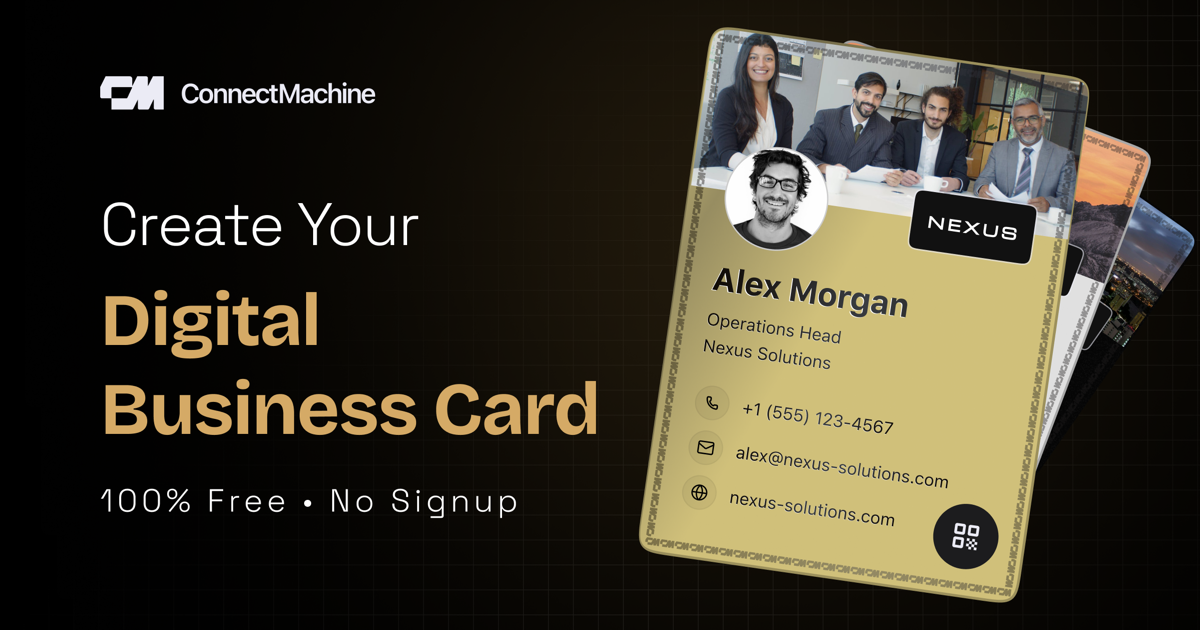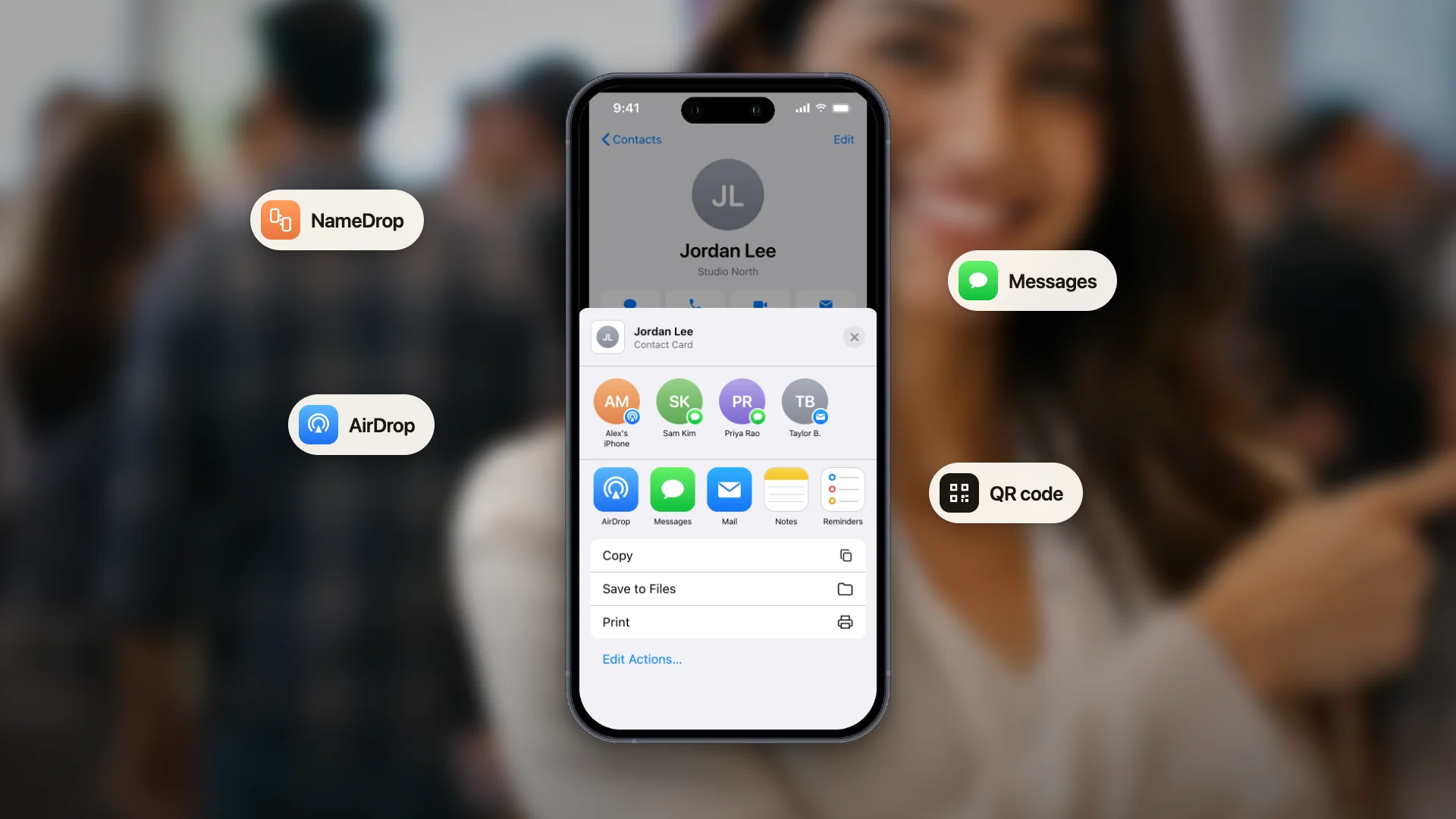


Une carte de visite NFC est une carte physique, en plastique, en métal ou en bois, dotée d'une puce de communication en champ proche. Approchez-la d'un téléphone compatible et celui-ci ouvre un lien, presque toujours vers le profil de carte de visite numérique de son propriétaire. C'est la technologie du paiement sans contact, appliquée aux présentations.
Le geste est indéniablement élégant, et les vendeurs misent beaucoup sur ce moment. Ce que le marketing passe sous silence, c'est que la puce n'est qu'un moyen de livrer un lien. Ce qu'elle ouvre, un profil de carte numérique, fait tout le travail réel, et cette partie ne demande d'acheter aucun matériel.
Ce guide expose les avantages réels des cartes NFC, les inconvénients que les fiches produit passent sous silence et une méthode simple pour décider si vous en avez besoin ou si le QR code déjà présent sur votre téléphone vous suffit. ConnectMachine ne vend pas de matériel NFC : lisez donc ceci comme un point de vue assumé, mais sans rien à vous vendre côté matériel.
Comment fonctionnent les cartes de visite NFC
La puce d'une carte NFC stocke une petite charge de données, en pratique une URL. Quand un téléphone dont le NFC est activé arrive à quelques centimètres, il lit la puce et propose d'ouvrir le lien. Aucune application n'est nécessaire sur le téléphone du destinataire, et la carte elle-même n'a besoin ni de batterie ni de recharge.
Comme la puce ne stocke qu'un lien, le vrai contenu de la carte vit en ligne. La plupart des cartes NFC pointent vers un profil de carte de visite numérique hébergé, que le propriétaire peut mettre à jour sans toucher à la puce. Cela mérite qu'on s'y arrête : la partie modifiable, enregistrable et toujours à jour de l'expérience, c'est le profil numérique, pas le plastique.
Les vrais avantages
Le contact est rapide et marquant
Un geste, pas d'appareil photo à cadrer, rien à taper. Dans une conversation animée sur un stand, la petite mise en scène peut vraiment briser la glace, et l'effet de nouveauté fonctionne encore auprès de ceux qui n'ont jamais vu ça.
Rien qui ne s'épuise
Contrairement au papier, une seule carte NFC couvre un nombre illimité d'échanges. Le lien qu'elle ouvre peut être mis à jour quand vos coordonnées changent, si bien que la carte ne se périme pas comme l'imprimé.
Ni application ni compte pour la recevoir
Le destinataire approche son téléphone et ouvre une page web. Pour lui, l'expérience est aussi fluide que de scanner un QR code.
Un objet physique, quand on en veut un
Certaines personnes aiment simplement remettre quelque chose en main propre. Une belle carte NFC en métal comble le même désir qu'un papier haut de gamme, tout en restant fonctionnelle.
Les inconvénients que les fiches produit oublient
Vous achetez du matériel pour livrer un lien
Une carte NFC coûte généralement entre 20 et 80 dollars, et pour une équipe ce montant se multiplie par le nombre de personnes. Le lien qu'elle livre, à savoir le profil de votre carte numérique, se partage gratuitement par QR code ou par URL depuis le téléphone que vous avez déjà sur vous.
Le contact échoue plus souvent que ne le laisse croire la démo
La réussite dépend du NFC activé sur le téléphone du destinataire, de l'emplacement de la puce et de la position de l'antenne selon le modèle. Coques épaisses, vieux Android et réglages NFC désactivés produisent tous ce moment gênant où l'on s'y reprend à trois fois. Les habitués gardent en général un QR code de secours, ce qui donne discrètement raison à la critique.
C'est un objet de plus à transporter, perdre et remplacer
L'argument, c'est que vous n'oublierez plus jamais votre carte, mais la carte NFC est elle-même une carte que l'on peut oublier. Votre téléphone, que vous avez manifestement toujours sur vous, affiche déjà un QR code et contient une carte de wallet.
Une carte, un lien
La plupart des puces ne contiennent qu'une seule URL. Si vous gardez des cartes distinctes selon les contextes (commercial, personnel, projet perso), il vous faudra soit plusieurs cartes physiques, soit une plateforme permettant de rediriger le lien.
L'argument écologique tient surtout de l'image
Les cartes NFC sont présentées comme l'alternative verte au papier, mais une carte en plastique équipée d'une puce a sa propre empreinte de fabrication et finit en déchet électronique. L'option réellement peu impactante est celle qui ne fabrique rien : partager depuis l'appareil que vous possédez déjà.
Contact NFC ou QR code : la comparaison honnête
| Contact NFC | QR code | |
|---|---|---|
| Coût | Vous achetez et remplacez la carte | Gratuit depuis votre téléphone |
| Compatibilité | Exige un NFC activé et trouvé du premier coup | N'importe quel appareil photo de téléphone de ces dernières années |
| Portée | Distance de contact uniquement | De l'autre côté de la table, sur une diapositive, à l'impression ou par e-mail |
| Où ça marche | En personne uniquement | En personne, à l'écran, imprimé, dans une signature e-mail |
Tout ce qui figure dans la colonne QR, une carte de visite QR vous l'offre gratuitement.
Une fois le format mis de côté, les deux méthodes font exactement la même chose : remettre à votre interlocuteur un lien vers votre carte numérique. Les différences sont pratiques.
- Coût : le partage par QR code depuis votre téléphone est gratuit. Le NFC suppose d'acheter puis de remplacer du matériel.
- Compatibilité : l'appareil photo de n'importe quel téléphone des dernières années lit les QR codes. Le NFC exige que la fonction existe, qu'elle soit activée et qu'on la trouve du premier coup.
- Portée : un QR code fonctionne d'un bout à l'autre d'une table, sur une diapositive, dans une signature d'e-mail ou imprimé sur n'importe quoi. Le NFC ne fonctionne qu'au contact.
- Redondance : votre QR code peut aussi vivre dans Apple Wallet ou Google Wallet et se télécharge en fichier prêt à imprimer, si bien que le même code couvre les écrans, les badges et le papier.
- Effet : le contact impressionne davantage. C'est la seule victoire nette du NFC, et pour certains elle vaut son prix.
La vérité qu'on tait
Chaque carte NFC est livrée avec un QR code de secours
La plupart des vendeurs de cartes NFC impriment un QR code sur la carte, pour les fois où le contact échoue. Ce plan B dit tout : le QR code est la couche fiable, et la puce n'est que la garniture posée par-dessus.
Programmez le rappel pendant que la conversation est encore fraîche.
Alors, qui a vraiment intérêt à en acheter une ?
Une carte NFC est un achat raisonnable si l'objet physique compte pour vous : vous aimez le rituel de remettre quelque chose en main propre, la nouveauté colle à votre marque et le moment du contact vaut bien 30 à 80 dollars comme accroche de conversation. Beaucoup de commerciaux entrent dans cette catégorie et sont ravis de leur achat.
Passez votre chemin si votre objectif est simplement un échange de contacts fiable et professionnel. Une carte de visite numérique partagée par QR code, par lien ou par carte de wallet livre le même profil, à davantage de téléphones, sans rien de plus à acheter, à transporter ou à perdre. Commencez par là ; vous pourrez toujours ajouter du matériel plus tard si le geste vous manque, et votre profil numérique sera déjà ce vers quoi il pointe.