
El networking le pide apertura, y la tarjeta de presentación es lo más abierto que lleva encima. Existe para entregarla a personas que acaba de conocer y, una vez que su número de móvil está impreso en ella, no hay forma de recuperarlo. Para la mayoría eso no supone ningún problema durante años, justo hasta el día en que sí lo supone.
El instinto de reservarse algo no es antisocial. Los comerciales, los reclutadores, las mujeres en sectores dominados por hombres, los periodistas y cualquiera que haya sufrido contactos insistentes tienen buenos motivos para pensar qué canal recibe un desconocido. El objetivo no es ser inaccesible, es elegir la puerta.
Esta guía explica cómo seguir siendo realmente contactable manteniendo privada su línea personal, qué poner en una tarjeta que verá una sala llena de desconocidos y cómo pensar en los datos de contacto que recoge a cambio.
Primero decida qué significa realmente estar disponible
La mayoría pone su móvil en la tarjeta sin preguntarse nunca qué quiere que ocurra después. Trabaje al revés, partiendo del resultado. Si el siguiente paso ideal tras conocerle es una llamada agendada, un enlace de reservas le sirve mejor que un número de teléfono. Si es una propuesta, el correo es el canal adecuado. El número de teléfono solo es la respuesta correcta cuando de verdad quiere recibir llamadas sin previo aviso de gente a la que vio una vez.
- ¿Quiere reuniones? Empiece por un enlace de agenda. Convierte mejor que un número y filtra las llamadas que nunca iban a llegar a nada.
- ¿Quiere consultas por escrito? Empiece por el correo, que le deja constancia y tiempo para pensar.
- ¿Quiere que le llamen sus clientes, pero no los desconocidos? Eso pide dos tarjetas, como se explica más abajo.
- ¿Quiere estar disponible sin que le interrumpan? Un número de trabajo aparte lo resuelve sin complicaciones.
Cuatro configuraciones prácticas
1. Un segundo número para el trabajo
Una línea de trabajo dedicada, ya venga de su empresa, de una tarifa móvil con segunda línea o de un servicio VoIP, es la solución más directa. Es un número real que puede dar sin reparos y que se puede silenciar fuera del horario laboral sin silenciar a su familia.
2. Correo primero, teléfono a petición
Ponga su correo en la tarjeta y dé su número solo cuando la conversación lo justifique. Es la opción más sencilla y no cuesta nada. Esa pequeña fricción hace un trabajo útil: quien no está dispuesto a escribir un correo difícilmente iba a convertirse en algo.
3. Un enlace de agenda en lugar de un número
Para quien vende su tiempo, una página de reservas es claramente mejor que un número de teléfono. La otra persona consigue un hueco garantizado con su atención en lugar de jugarse a cara o cruz que usted descuelgue, y usted consigue una cita en el calendario en lugar de una interrupción.
4. Tarjetas distintas para salas distintas
Una sola cuenta de ConnectMachine puede alojar varias tarjetas, así que la tarjeta que enseña en un congreso de doscientas personas no tiene por qué ser la que da a un cliente con el que lleva un año trabajando. Cree una tarjeta de evento sin la línea directa y una tarjeta de cliente con ella, y elija en el momento.
La asimetría que conviene recordar
Siempre puede añadir, nunca quitar
Dar su número más adelante en una conversación es fácil y se lee como un gesto de confianza. Recuperarlo de una tarjeta que ya ha entregado es imposible. Empiece por la opción más restringida y amplíela de forma deliberada.
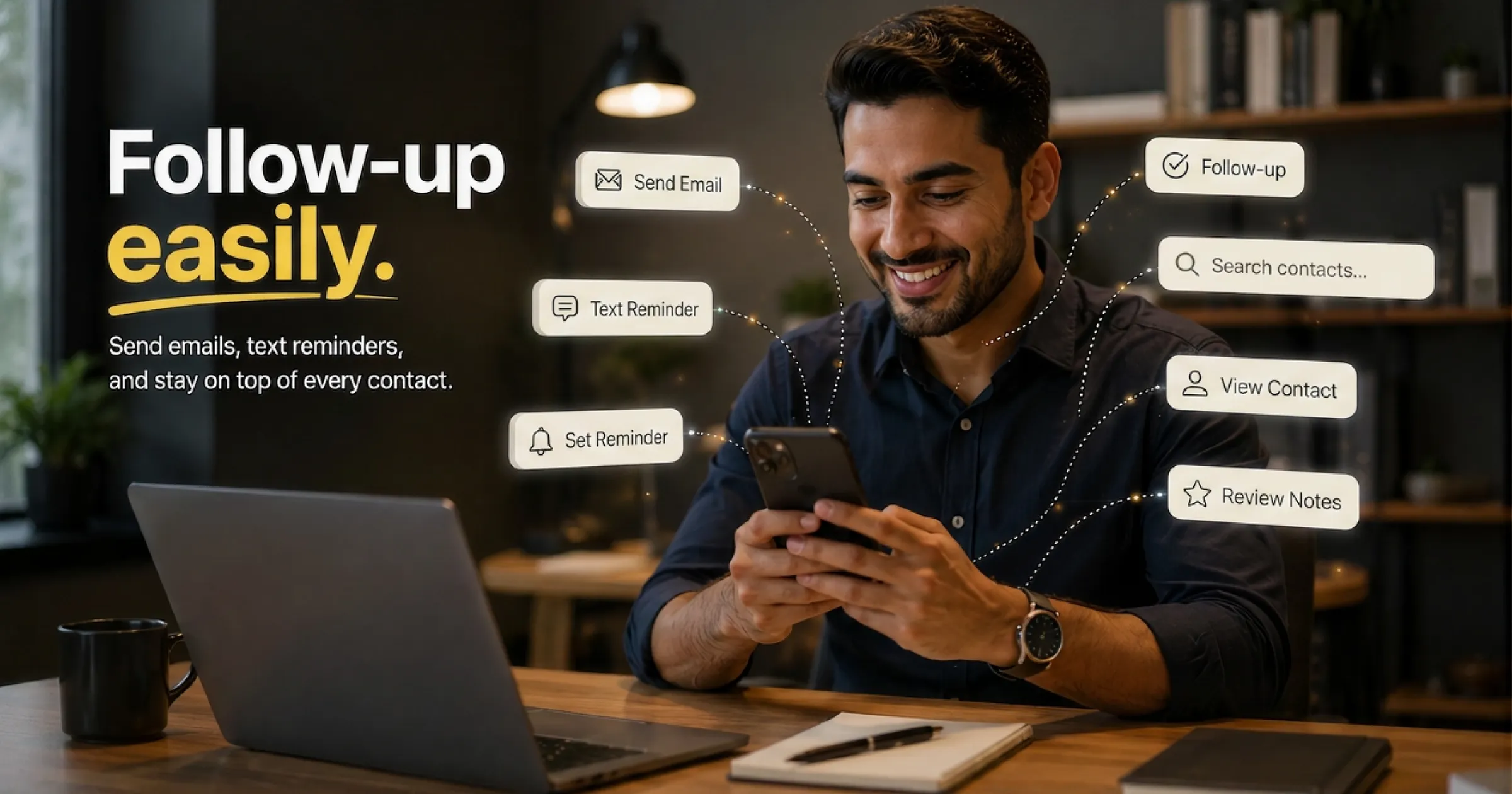
Configura el recordatorio mientras la conversación aún está reciente.
Qué debe decir una tarjeta que verá una sala llena de desconocidos
Su tarjeta es pública por diseño. Vive en una URL de navegador y existe para compartirse, así que trate todo lo que aparece en ella como información que no le importa que circule.
- Su nombre, cargo y empresa: las partes que le hacen localizable y creíble.
- Un canal que revise de forma activa, elegido a conciencia entre las opciones anteriores.
- Enlaces profesionales: LinkedIn, un portafolio o una página de reservas.
- Titulaciones o datos de colegiación si su profesión los espera, ya que están pensados para verificarse.
- Ni su dirección particular, ni un número que no querría ver en el teléfono de un desconocido, ni nada que le incomodaría ver en una captura de pantalla.
Si más adelante cambia de opinión, actualice la tarjeta una vez y todo el que guardó su enlace verá la versión vigente. Esa es una propiedad de seguridad relevante que el papel nunca tuvo: su tarjeta se puede editar después, aunque lo que alguien ya haya guardado en su teléfono se queda en su teléfono.
La otra mitad: los contactos que recoge
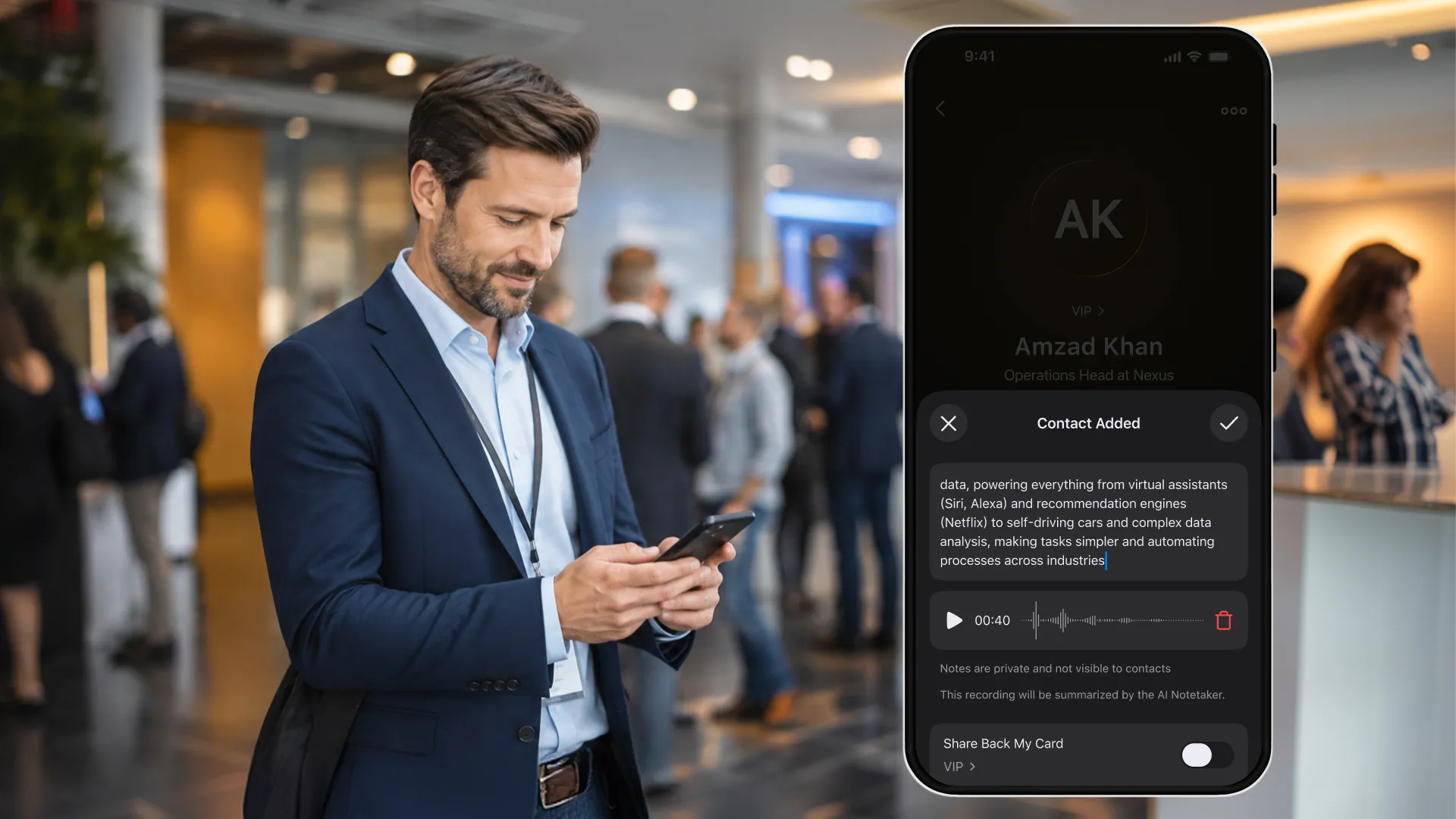
La privacidad en un evento de networking funciona en ambas direcciones. Usted también recoge datos de otras personas, a menudo decenas en un solo día, y esas personas tomaron la misma decisión de confianza que usted acaba de analizar. Dónde viven esos datos importa.
- Compruebe que la plataforma cifra los datos en tránsito y en reposo. ConnectMachine hace ambas cosas.
- Compruebe si los contactos son privados por defecto en lugar de volcarse a un directorio más amplio. En ConnectMachine son privados y solo suyos.
- Compruebe la respuesta sobre la venta de datos. ConnectMachine no vende sus datos.
- Compruebe la postura regulatoria si afecta a su trabajo: ConnectMachine cumple el RGPD y ofrece localización de datos.
Una red personal de contactos construida por usted mismo solo es suya si los contactos que contiene son realmente suyos. Las herramientas gratuitas que monetizan los datos de contacto están haciendo otro trato, y conviene saber en cuál está antes de un congreso y no después.
En resumen
No le debe su número de móvil a todas las personas que conoce. Elija el canal que encaje con el resultado que busca, guarde una tarjeta aparte para quienes se han ganado la línea directa y asegúrese de que los contactos que recoge se guardan en un sitio privado y cifrado.
Bien hecho, nada de esto le hace menos accesible. Le hace localizable en los canales que de verdad atiende, que es lo que significa realmente ser fácil de contactar.