
The 5 best digital business card apps in 2026
Five platforms, what each is genuinely best at, and where each one falls down.
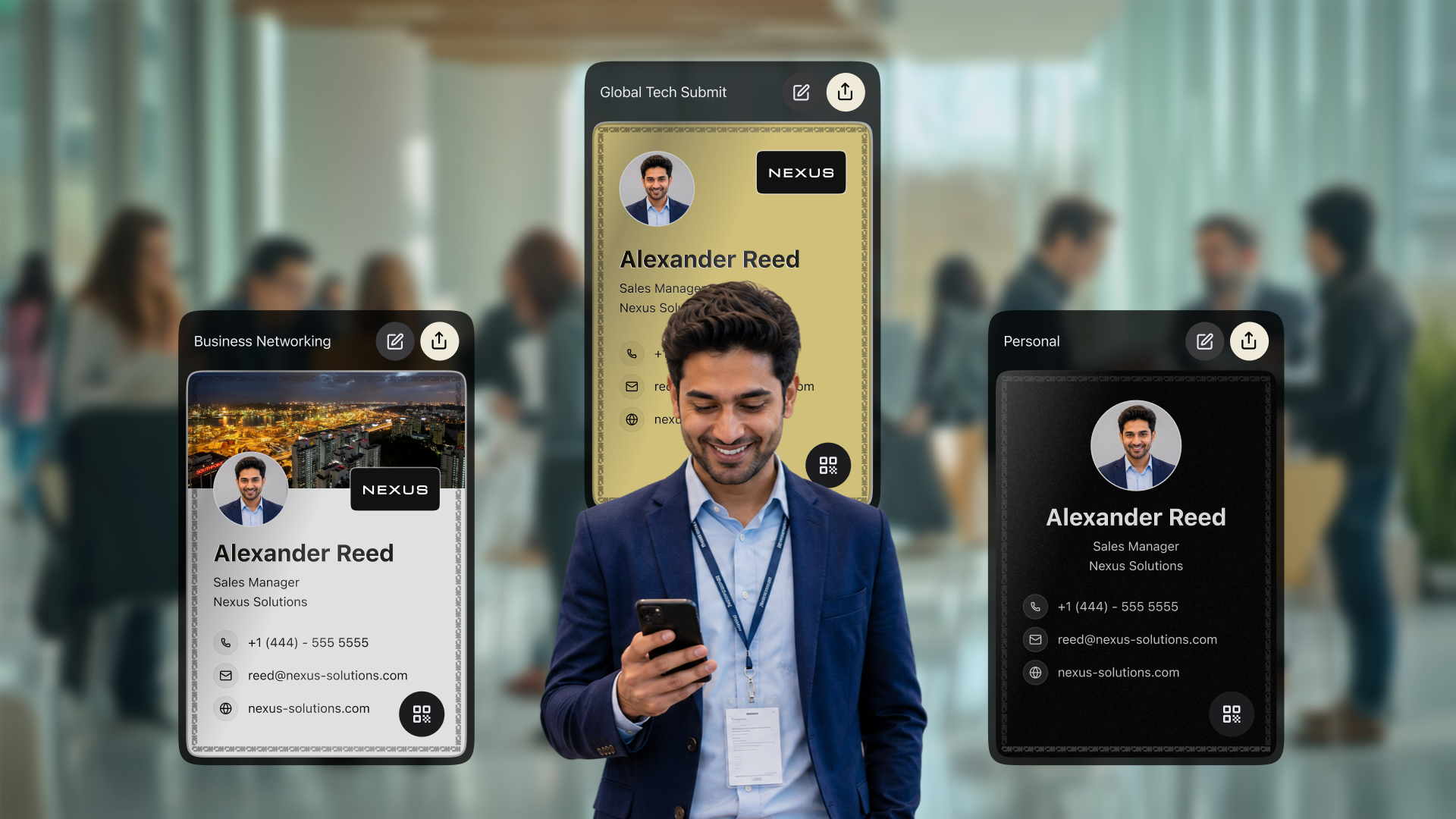
Two things before the list. First, we build ConnectMachine, and we have ranked it first. Every comparison article in this category does the same with its own product, so read this with the skepticism that deserves. We have tried to earn it back by naming our own limitations and by being specific about when a competitor is the better answer.
Second, most of these tools do the basic job fine. A card that opens on any phone without an app is table stakes in 2026. What separates them is what happens after the exchange: whether the contact reaches your CRM, whether you can find the person again months later, and whether pricing does something unpleasant when event season arrives.
How we ranked these
Ranking is by how well each platform handles the contact after capture: recall, context and CRM sync. That is where the category's real gap is and where ConnectMachine leads. Rank on a different criterion and the order changes, which is why every entry states who it is actually for.
Post-capture
Does anything happen automatically after a contact is saved, or does the exchange stop at a card view?
Recall
Can you find the right person months later by memory, context, event, company, role or what you discussed?
Integrations
Does the contact reach your CRM or workflow without a manual export every time?
Pricing predictability
Are there per-scan, credit or team surprises that make a busy event month more expensive than expected?
Hardware
Is there a physical NFC option if you need one? If you need NFC hardware, skip to Popl at #4. None of the top three sell it.
Quick comparison
1. ConnectMachine
Best for remembering the context behind a contact.
2. Blinq
Best for email signatures and enterprise HR provisioning.
3. HiHello
Best for getting started fast, and internal company directories.
4. Popl
Best for NFC hardware and high-volume event lead capture.
5. Wave Connect
Best for predictable flat-rate pricing.
What changed in 2026
A few years ago, the main question was whether a digital card could replace a paper card. That question is mostly settled. Every serious option lets someone scan a QR code, open a card in a browser, and save the details without installing your app. If a product still makes the recipient do work, remove it from the shortlist.
The harder question is what happens next. Event teams care about capture volume and CRM delivery. Consultants and founders care about remembering the actual conversation. IT and HR buyers care about provisioning, brand control, and what happens when someone changes role or leaves. The same feature grid hides those differences, so the ranking below weights workflow fit more heavily than the prettiness of the card editor.
Hardware is now a preference, not a requirement
NFC cards are useful when the physical object is part of the moment. They are not required for a modern digital card experience. QR and wallet sharing cover more devices, cost less, and do not need reprints.
Pricing needs a stress test
A quiet month and a conference month are not the same buying scenario. Before choosing, check what happens after a busy week of scans, team seats, exports, analytics and integrations.
1. ConnectMachine
Best for
Remembering the context behind a contact.
Disclosure: we build ConnectMachine. We have put it first, which is what every article in these search results does with its own product, so weigh this entry accordingly and check the others yourself. The limitations listed below are real and we have not softened them.
ConnectMachine is the pick if your problem is not sharing a card but remembering the person six months later. It scans paper cards, LinkedIn QR codes and badges, then keeps the context around them: where you met, what was said, what you promised. The AI Concierge answers questions like "who did I meet at Web Summit who works in fintech?" without you having tagged anything in advance. The AI Note Taker records and summarizes meetings with speaker identification, so notes land on the right contact rather than in a separate app.
What it does well
AI Concierge for natural language recall across notes, events, companies and roles; AI Note Taker with speaker identification; native MCP server so contacts are queryable from Claude and Cursor; native Zapier integration plus contact webhooks for CRM sync; six interface languages including Simplified Chinese; Apple Wallet and Google Wallet; custom domains on team plans; offline capture queue and WhatsApp capture.
Where it falls short
No NFC hardware of any kind. If you need a physical card to hand over, this is the wrong tool. ConnectMachine also has a smaller independent review base than the established names because the product is newer, and CRM connections route through Zapier or webhooks rather than direct native connectors.
Pick this if
You are a founder, consultant, recruiter or sales professional who meets a lot of people and loses track of which ones mattered.
2. Blinq
Best for
Email signatures and enterprise HR provisioning.
Blinq is the most polished mainstream option, and the one with the deepest enterprise plumbing. Its email signature builder is the strongest in the category, and its HR system integrations mean cards can be provisioned automatically as people are hired. That becomes genuinely useful once you are past a few dozen employees. It also carries a large review base, which matters if your procurement team weighs that.
What it does well
Best-in-category email signature builder; native integrations with major HR systems for automatic card provisioning; AI contact enrichment; a mature mobile app; and a large independent review base for teams that want procurement comfort.
Where it falls short
Card designs are functional rather than distinctive. The feature surface is broad enough that smaller teams may not use most of it, and the product is built around the card exchange more than what happens to the contact afterwards.
Pick this if
Your company runs a major HRIS and wants cards created automatically, or email signatures are a real channel for your team.
3. HiHello
Best for
Getting started fast, and internal company directories.
HiHello largely defined this category, and it is still one of the quickest tools to get running. Setup takes minutes, the free tier is one of the better-known options available, and the corporate directory is a genuine differentiator for larger organizations that want an internal people-finder sitting alongside outward-facing cards.
What it does well
Fast setup, a well-regarded free tier, corporate directory for internal use, video embedding, virtual backgrounds, and a mature compliance and security posture.
Where it falls short
HiHello is software only, so there is no physical card option. Deeper features sit in higher tiers, and like most of the category it tends to stop at the card rather than the relationship.
Pick this if
You want a strong free card as an individual, or you are a mid-size company that wants an internal directory alongside digital cards.
4. Popl
Best for
NFC hardware and high-volume event lead capture.
If you work trade shows, Popl is built for you in a way nothing else on this list is. The hardware range covers cards, badges, wristbands and watch bands. Badge scanning is designed for volume, and there is a full enterprise admin dashboard behind it. This is the category's hardware leader and one of the most recognizable brands on an event floor.
What it does well
Wide NFC hardware range, event badge scanning built for volume, a large integration ecosystem, enterprise admin dashboard with SSO, and strong brand recognition at events.
Where it falls short
Hardware means cost per person and reprints when details change. The platform is broad, so smaller teams may pay for surface they will not use. Check team pricing directly, because it is quoted rather than published.
Pick this if
Your sales team has a heavy event calendar and wants something physical to hand over.
5. Wave Connect
Best for
Predictable flat-rate pricing.
Wave's entire positioning is cost predictability: a flat rate rather than usage-based billing, with analytics and contact export available further down the tiers than is typical. If what pushed you to look for an alternative was an unexpected invoice after a busy event month, this is the direct answer to that.
What it does well
Flat-rate pricing model with no usage-based charges, analytics and contact export available on lower tiers, Apple Wallet and Google Wallet support, and team management with contact ownership and bulk editing.
Where it falls short
Onboarding presents a lot of the product at once. Wave has a smaller brand presence than Blinq or Popl, and its team plans work best above a few seats.
Pick this if
Your team got caught out by usage-based billing somewhere else and wants a predictable bill.
Which should you pick?
You forget who people were
Pick ConnectMachine.
You need a physical card in hand
Pick Popl.
Email signatures matter most
Pick Blinq.
You want the best free-tier starting point
Pick HiHello.
Unpredictable billing burned you
Pick Wave Connect.
Frequently asked questions
Do digital business cards need an app to receive?
Which has the best free plan?
Can I switch without losing contacts?
Are NFC cards worth it?
Remember the person, not just the card
Try the digital business card built for follow-up.
ConnectMachine helps you share your card, scan the cards you receive, and keep the context that makes a new contact useful months later.